Kansas State
First Impressions: A Bold and Professional Design
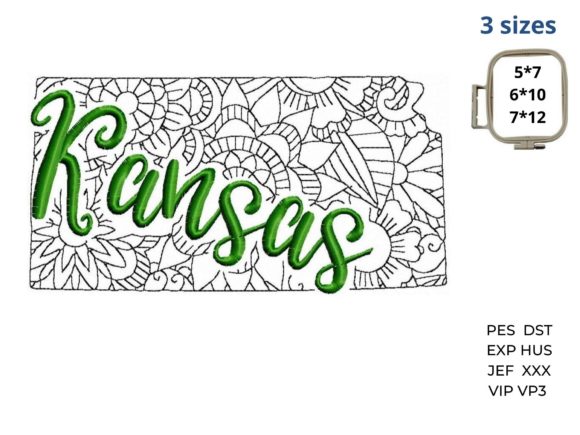
The Kansas State design immediately strikes a balance between professionalism and creativity. With its detailed map of the state, it feels both modern and classic, making it a versatile choice for small businesses looking to make a statement. The artwork is clean and precise, which suggests a high level of craftsmanship. As an embroidery designer, I find the visual personality of this design to be friendly yet refined, ideal for branding that needs to stand out without being too flashy.
Business Use: From Patches to Tote Bags
Kansas State is a strong candidate for multiple business applications. Its geographic detail makes it perfect for embroidered patches, especially when used as a brand emblem or a subtle logo on staff uniforms. It also works well as a sleeve detail or cap front design, where a smaller version can still be clearly visible and impactful.
For tote bags and aprons, the design offers enough space to maintain clarity and detail. When applied to work shirts or customer gifts, it adds a touch of local pride and identity. The design’s versatility extends to product packaging accents and boutique merchandise, where it can serve as a memorable brand element.
When considering commercial embroidery projects, it's important to note that the design has a good balance of detail and simplicity. This allows it to adapt to various fabric textures and sizes without losing its integrity. Whether used as a standalone piece or part of a larger branding strategy, Kansas State provides a solid foundation for small business merch.
Design Considerations for Real-World Use
While the design is impressive in concept, there are a few areas where care should be taken during production. For instance, the intricate outlines and detailed regions may require a higher stitch density to ensure they remain sharp and clear, especially on smaller items like patches or cap fronts.
Testing the design in black and white before finalizing is a crucial step. This helps identify any issues with contrast or legibility, particularly when using dark thread colors on light fabrics. Additionally, checking how the design performs on textured surfaces, such as denim or canvas, will help determine if stabilizer use is necessary for optimal results.
Small patch sizes and curved surfaces pose challenges for intricate designs. To mitigate this, it’s recommended to review the design at different scales and test it on real fabric. Using proper stabilizer can prevent distortion and ensure the finished product maintains its intended look and feel.
Impact on Brand Identity and Customer Engagement
Integrating Kansas State into a brand’s visual assets can significantly enhance recognition and trust. The design’s geographic focus aligns well with local businesses, creating a sense of community and authenticity. This is especially valuable for handmade products and custom apparel, where storytelling and regional pride play a key role.
From a marketing perspective, the design can be used across multiple channels, including printable mockups, digital embroidery files, and physical samples. By maintaining visual consistency across all touchpoints, small businesses can build a cohesive brand identity that resonates with their audience.
Customer engagement is another benefit of using Kansas State. Whether as a branded gift, event merchandise, or a unique label, the design adds value and creates a memorable experience. It also supports the handmade product movement, appealing to crafters and Etsy sellers who prioritize quality and originality.
Practical Embroidery Designer Notes
As an experienced designer, I recommend several steps to ensure successful implementation of Kansas State. First, always test the design in black and white to assess its clarity and contrast. Next, check if it works at small patch size, as some details may not translate well when scaled down.
Reviewing thread color contrast is essential for visibility, especially on dark uniforms or garments. Inspecting spacing and ensuring even distribution of stitches will contribute to a professional finish. Confirming hoop size is also important, as oversized designs may require multiple passes or adjustments to fit within standard embroidery frames.
Testing the design on real fabric is a must before mass production. Using the right stabilizer can prevent puckering and ensure the design remains crisp after repeated washing. Creating a printable mockup for client approval helps visualize the final product and ensures alignment with brand expectations.
Finally, comparing the design with other brand assets and confirming commercial licensing before business use will protect your investment and avoid potential legal issues. Always verify file format compatibility and ensure you have the necessary rights for commercial embroidery projects.
Final Thoughts: A Versatile Asset for Small Businesses
Kansas State is more than just a map—it’s a powerful tool for small businesses looking to elevate their brand through custom embroidery. Its blend of detail and simplicity makes it adaptable to a wide range of applications, from patches and caps to tote bags and aprons.
By carefully considering stitch density, thread colors, and fabric texture, designers can maximize the design’s impact while maintaining its integrity. Whether used as a standalone piece or integrated into a larger branding strategy, Kansas State offers a compelling solution for those seeking to create meaningful, visually striking merchandise.